Apr 23, 2026
Qwen 3.6-Plus vs GPT-4: Which Model Is Better for Performance, Cost, and Real Use Cases?
Cost Optimization
Qwen 3.6-Plus is gaining attention as a serious alternative to GPT-4. But how does it actually perform in real-world systems? This guide compares performance, cost, and production use cases to help you decide which model to use.
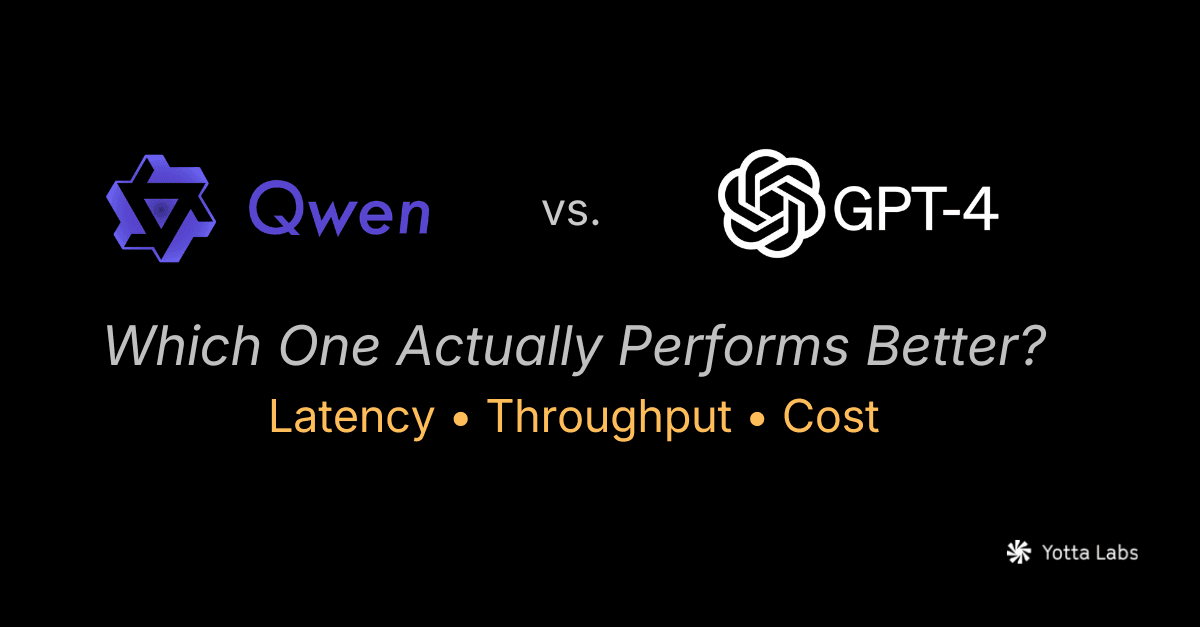
Qwen 3.6-Plus is starting to show up in real workloads, not just benchmarks, as more teams explore alternatives to API-based models like GPT-4.
Developers are testing it in production. Teams are comparing it directly to GPT-4. And early results suggest it’s more competitive than expected.
But most comparisons miss the point.
They focus on model quality in isolation, instead of how these models behave inside real systems. In practice, performance is shaped by latency, throughput, infrastructure, and cost at scale.
That’s where the real differences show up.
Quick Comparison: Qwen 3.6-Plus vs GPT-4
| Category | Qwen 3.6-Plus | GPT-4 |
| Deployment | Self-hosted or cloud | API-based (OpenAI) |
| Cost Structure | Lower potential cost, infra-dependent | Higher per-token cost, predictable |
| Performance | Strong, depends on setup | Consistent and optimized |
| Latency | Variable | Stable |
| Scaling | Requires infra management | Managed automatically |
| Flexibility | High | Limited |
What Actually Matters in Performance
At a surface level, both models are capable.
But in production, performance is not about how smart the model is. It’s about how efficiently it runs under real conditions.
Latency is tied to token generation speed. Throughput depends on batching and GPU utilization. Memory constraints often become the real bottleneck before compute does.
This is where Qwen 3.6-Plus and GPT-4 start to diverge.
GPT-4 is delivered through a fully managed system. It’s optimized behind the scenes, so performance is stable and predictable. You don’t control the system, but you don’t need to.
Qwen 3.6-Plus gives you that control. But with that control comes variability. Performance depends on how well the system is designed and optimized.
Cost Is Not What Most People Think
Most comparisons reduce cost to price per token.
That’s misleading.
In real systems, cost is driven by efficiency. How well you utilize GPUs. How much overhead exists in your pipeline. How effectively you batch requests.
GPT-4 is more expensive per request, but simple to use. There’s no infrastructure to manage, and costs are predictable.
Qwen 3.6-Plus can be significantly cheaper, but only if the system is optimized. Poor utilization or inefficient scheduling can erase any cost advantage quickly.
Where Each Model Makes Sense
The choice between these models isn’t about which one is better overall. It’s about what kind of system you’re building.
GPT-4 makes sense when speed of implementation and reliability matter most. If you want to ship quickly and avoid infrastructure complexity, it’s the safer option.
Qwen 3.6-Plus becomes more interesting as workloads scale. When cost starts to matter, or when you need more control over how inference is handled, self-hosted models become much more compelling.
That shift is already happening in practice. Platforms are starting to make newer Qwen models easier to run without managing complex infrastructure. For example, Qwen 3.6-Plus is now available with optimized GPU support, making it possible to test and deploy these models in real workloads without building everything from scratch.
The Real Tradeoff
At a high level, the difference is simple.
GPT-4 gives you simplicity.
Qwen 3.6-Plus gives you control.
But under the surface, the tradeoff is really about infrastructure.
With GPT-4, the complexity is abstracted away. With Qwen 3.6-Plus, you’re responsible for it. That includes everything from batching strategies to GPU allocation and scaling behavior.
Most teams underestimate how quickly that complexity grows.
Final Thoughts
Qwen 3.6-Plus is not just another model release. It represents a broader shift toward more flexible, infrastructure-driven AI systems.
GPT-4 still sets the standard for reliability and ease of use. But models like Qwen are pushing the conversation toward performance, cost, and control at scale.
The right choice depends less on the model itself, and more on how you plan to run it.
If you’re evaluating models like Qwen 3.6-Plus in real workflows, the challenge usually isn’t just choosing the model, it’s actually running it efficiently.
Tools like Yotta’s AI Gateway make it easier to test and switch between models like Qwen and others without getting locked into a single provider, so you can focus on performance and cost instead of infrastructure.